How the Constitution Creates an Education Crisis
Protests by learners in Kraaifontein have suddenly brought to the fore an unforseen tension in the application of the Constitution. According to section 29(1) of the Constitution, everyone has the right to a basic education. This includes all residents: citizens as well as immigrants, the children of legal immigrants as well as those of undocumented immigrants. This principle is further reinforced by the Schools Act, which requires that “every parent must cause every learner for whom he or she is responsible to attend a school.”
The problem, however, is that this constitutional and legal duty is becoming increasingly difficult to fulfil within a public school system under severe financial, administrative and capacity pressure.
The Constitution was drafted at a time when education was largely understood as an institutional activity. Section 29(2) refers to the right to receive education in public educational institutions, while section 29(3) gives everyone the right to establish and maintain independent educational institutions. However, the constitution makes no explicit provision for education outside institutions, such as online education, home education or other decentralized forms of education.
The Pressure Mounts
The cost of providing education to a child in a public school is approximately R25 000 per year. According to a media statement by Minister Gwarube in January 2026, there are approximately 250 000 foreign learners in public schools. This represents the costs to the taxpayer of around R6 billion.
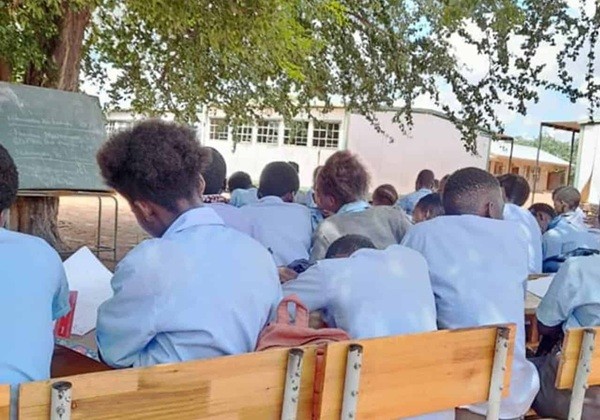
As the state’s debt burden grows and the tax base shrinks, the state is increasingly losing the ability to give practical effect to the right to basic education. The public school system already lacks capacity. There are too few schools, existing schools are overcrowded, and not all children are able to secure places. In 2026, reports also emerged that some education departments were struggling to pay the bills and salaries of existing schools.
This pressure on the system is creating growing tension in communities. When South African children cannot find places in public schools, while approximately 250 000 foreign learners are already accommodated in the system, the shortage of school places and funding becomes visible to the general public. In May 2026, learners from schools in Kraaifontein launched a protest and demanded that foreign learners leave public schools and the country. The protest shows how a capacity crisis in education can easily turn into social conflict — probably a situation the drafters of the Constitution did not foresee.
Leaving aside the question of large-scale deportations, a more feasible solution to this dilemma is to make education outside public institutions more accessible. Alternative forms of education can be affordable even for the poorest communities for several reasons.
Firstly, they do not require the construction of new schools. They can operate from existing infrastructure such as residential properties, churches and community centers. Secondly, they do not require large numbers of registered teachers in physical venues, since online platforms can make the work of a few well-qualified teachers available to far more learners than would be possible in an ordinary classroom. Thirdly, these models are more adaptable and can be better structured according to the needs of individual children, without every need necessarily requiring a separate specialized school.
Unfortunately, the state has recently made alternative education more difficult, especially with the introduction of the BELA Act.
Alternative Approaches to Education are Unwelcome
Despite several appeals to Parliament, no provision was made in the law for online education. Despite overwhelming criticism of the amendments to section 51 of the Schools Act, the registration requirements for home education were made stricter. Despite the growth of a variety of small and more informal learning centers, the requirements for registering as an independent school were made more onerous by increasing the penalty for operating an unregistered independent school.
The general policy direction of restricting and complicating independent education is not only ANC policy. It stretches across party lines and cannot be solved merely through an election or a government of national unity. It may take an education crisis for the state to change direction. Just as stage 6 load-shedding opened the door for independent electricity provision, a crisis in education may open the door for affordable independent education.
The protests in Kraaifontein may be an early warning that pressure on the education system is increasingly turning into social conflict. The state can respond to this crisis by creating more space for alternative education.
Firstly, the National Education Council can be restructured to include meaningful representation from online education, informal learning centres, home education and independent schools. Such a council can propose policies that make education outside public schools more accessible and affordable, including for the poorest communities.
Secondly, circulars that place unnecessary restrictions on the use of online education can be withdrawn.
Thirdly, a moratorium could be placed on the prosecution of parents whose children are not registered for home education.
Fourthly, a moratorium could also be placed on the prosecution of persons or communities operating independent educational institutions that currently cannot register within the existing registration system.
The Constitution has contributed to an education crisis. In turn, this crisis may open the door to a new dispensation in which more forms of education are recognized and educational freedom is expanded in practice.
About the author

Comments
Events
Has no connect to show!
Legal & Research
Homeschooling and the law
Home schooling was recognized in 1996 in Section 51 of the SA Schools
+ ViewCentres
Homeschool ABC
Videos

SAHomeschoolers.Org Youtube Channel
Support




Curriculums




Frequently Asked Questions
-
Will digital ID’s affect homeschoolers?
South Africa is busy introducing digital ID’s. Many parents are concerned that this will infringe on the freedom to choose home education. Creating a...
-
Do I need to be a qualified teacher?
No. Research has found no correlation between the qualification of the parent and the academic performance of the child. Research shows that...
-
Do home learners sometimes wish they were in school and were normal?
They generally like being homeschooled. Some homelearners go to school for the experience but many return to homeschooling as within the homeschool...
-
Can I be a working mom and homeschool?
Single parents who are committed to homeschool organize a schedule around their work commitments and sometimes involve family or tutors to assist...